Overwintering pest defense solves the biological aggregation cycle that drives insects into living spaces every autumn. In central Virginia, falling September temperatures and shortening daylight trigger diapausing…
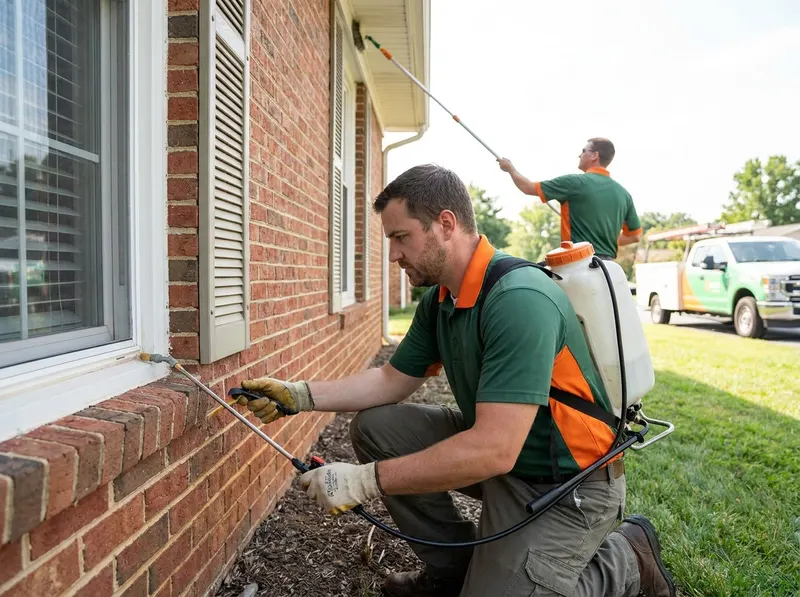
Overwintering pest defense solves the biological aggregation cycle that drives insects into living spaces every autumn. In central Virginia, falling September temperatures and shortening daylight trigger diapausing pests, principally the brown marmorated stink bug, to seek warm vertical faces before finding shelter inside structural framing. Historic brick homes in Rivermont, Federal Hill, and Diamond Hill present continuous entry paths through deteriorating mortar joints, original wood siding laps, and soffit venting. Newer vinyl-clad and composite construction in Wyndhurst and Cornerstone provides thermal entry routes behind exterior corner posts, unsealed weep holes, and roofline transition points. Once insects enter interior sheetrock cavities, residual surface pesticides cannot reach the population; structural defense requires halting insects at the external envelope.
Treatment follows a strict three-phase intervention. Phase one inspects western and southern structural exposures, which absorb the highest afternoon solar heat and draw peak insect clustering. Phase two introduces a targeted, water-based microencapsulated exterior barrier across exterior thresholds, window casings, roof eaves, and architectural trim, bonding to masonry and painted wood without leaving oily residue. Phase three executes physical exclusion: technician teams seal gaps larger than 3 millimeters using elastomeric exterior sealants, high-density weatherstripping, and stainless steel mesh across attic louvers and crawlspace foundation penetrations.
Homeowners managing active indoor sightings face a clear operational choice between structural exclusion and indoor fogging. Aerosol insect foggers discharge broad-spectrum neurotoxins across interior surfaces without contacting the thousands of dormant pests harbored safely inside ceiling joists and exterior insulation. When warm sunny winter afternoons activate these harbored insects, they re-emerge into bedrooms and kitchens regardless of prior indoor spraying. A targeted exterior perimeter defense paired with permanent physical sealing eliminates the root structural entry vector, avoiding unnecessary indoor chemical applications while safely protecting indoor environments occupied by children and pets.
Every job gets a firm, written price after a free on-site visit.
Tell us about your stink bug and overwintering pest defense job in Lynchburg and we'll send a clear, written quote, usually the same day.
 Quervia Pest Elimination