Rodent exclusion resolves the primary physical defect allowing vermin entry, separating structural defense from perpetual chemical spraying. In Lynchburg's historic neighborhoods such as Rivermont, Diamond Hill, and…
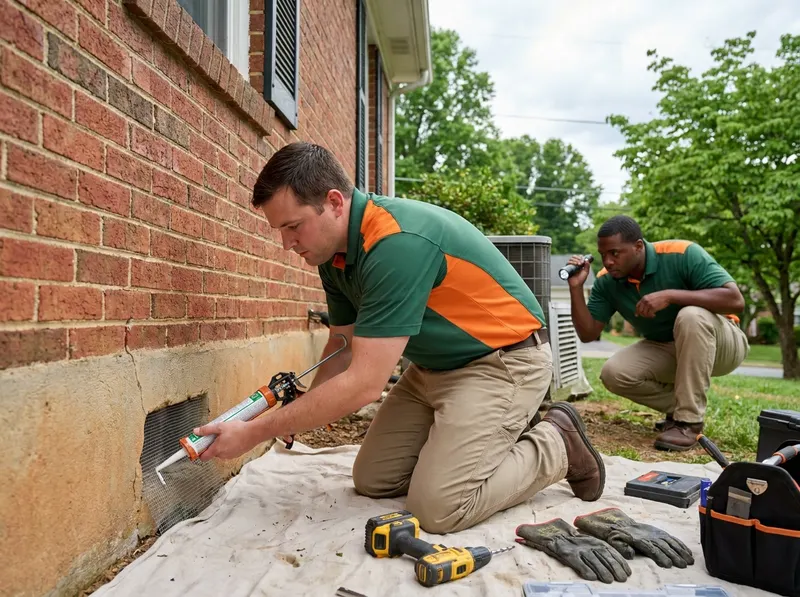
Rodent exclusion resolves the primary physical defect allowing vermin entry, separating structural defense from perpetual chemical spraying. In Lynchburg's historic neighborhoods such as Rivermont, Diamond Hill, and Federal Hill, aging fieldstone foundations, settled crawl space access doors, and deteriorating brick mortar joints permit house mice and Norway rats to access floor systems. A mouse requires an opening of only 0.25 inches, the diameter of a standard pencil, while an adult rat breaches gaps measuring 0.5 inches. Standard route-based pest operations place exterior bait stations containing anticoagulant rodenticides; while this temporarily lowers exterior population pressure, it leaves foundation gaps open and allows poisoned rodents to die within interior wall voids, producing biohazard contamination and severe secondary odor issues. Mechanical exclusion terminates the entry cycle permanently by installing 19-gauge galvanized hardware cloth, copper mesh, metal flashing, and elastomeric sealants along foundation sills, roof junctions, plumbing penetrations, and crawl vents.
Different building styles require distinct technical interventions across the city. Modern residential frames in Wyndhurst and Cornerstone frequently experience rodent intrusions along vinyl siding weep holes, air conditioning line-set penetrations, and garage door bottom astragals. Conversely, properties near wooded expanses like the Blackwater Creek Trail or older wood-framed ranches in Fort Hill and Timberlake commonly encounter roof rats exploiting overhanging tree limbs to enter unscreened attic soffit louvers and ridge vents. Eradication proceeds strictly after, or concurrent with, mechanical exterior sealing. Interior depopulation utilizes snap traps, multi-catch mechanical devices, and monitored capture stations situated along confirmed biological travel paths, marked by sebum rub marks and fecal deposits, avoiding broadcast rodenticides inside living areas to protect infants, domestic dogs, and cats.
The operational trade-off centers on upfront capital investment versus long-term expenditure. Structural exclusion carries a higher initial remediation cost than a low-cost recurring monthly chemical visit, yet it eliminates continuous lifetime contract fees by curing the structural vulnerability. Remediation sequences occur in four distinct stages: first, a crawl-to-roof perimeter inspection mapping all breaches; second, mechanical reinforcement of all exterior perimeter apertures under 0.5 inches; third, high-density interior mechanical trapping until zero activity is recorded on dynamic tracking monitors; and fourth, remediation of bio-contaminated attic or crawl space insulation. Properties bordering dense water corridors near Percival's Island Natural Area or commercial nodes near the Lynchburg Community Market maintain continuous rodent population density in the outdoor environment; structural exclusion ensures those natural outdoor cycles never breach indoor subfloors.
Every job gets a firm, written price after a free on-site visit.
Tell us about your rodent exclusion and eradication job in Lynchburg and we'll send a clear, written quote, usually the same day.
 Quervia Pest Elimination